Subscription 中文
中文
Subscription




2026-05-06Source:
The second quarterly Chief Advisors-Secretariat joint working meeting of the China Council for International Cooperation on Environment and Development (CCICED) of 2026 was held both in Beijing and online on April 30.
Liu Shijin and Scott Vaughan, CCICED chief advisors; Cui Dandan, Level Ⅱ Bureau Rank Official (Deputy Director-General Level), International Cooperation Department, Ministry of Ecology and Environment of China; and Lana Edwards, CCICED Special Advisor and Director-General of the Department of Bilateral Affairs and Trade at Environment and Climate Change of Canada, spoke at the meeting.
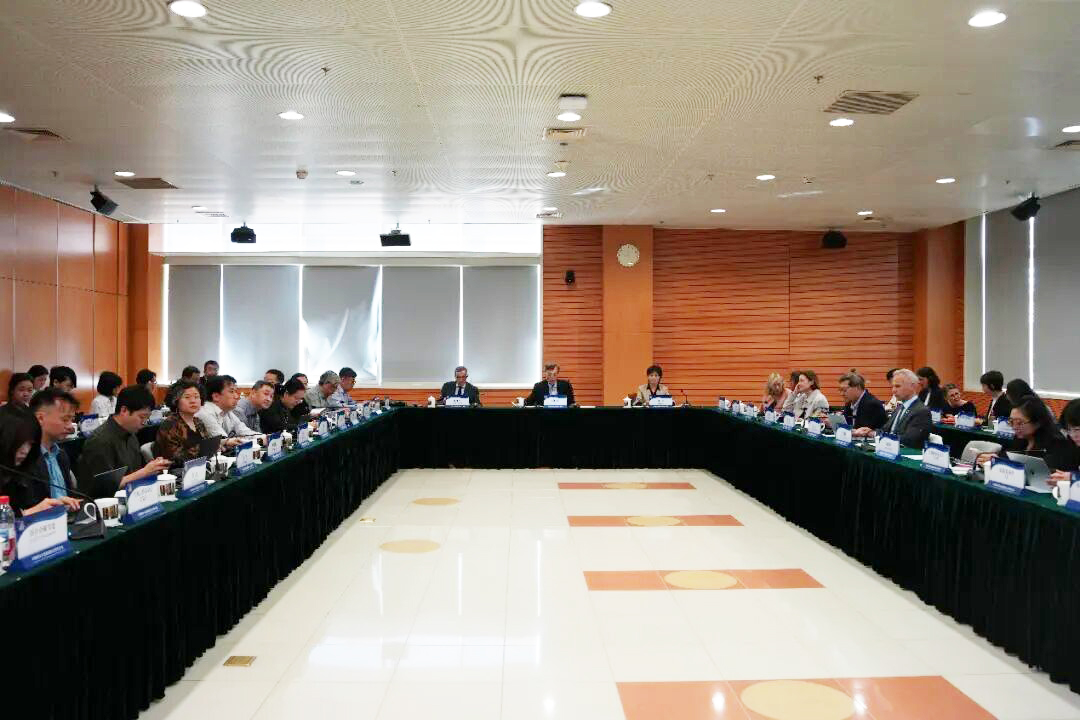
Liu Shijin noted that green transition at home and abroad is facing new developments and dynamics. The U.S.-Israel-Iran conflict has triggered global energy security concerns, accelerating the shift toward renewable energy, yet better synergy between energy security and green transition remains essential. Meanwhile, the Chinese government recently issued the Comprehensive Evaluation and Assessment Measures for Carbon Peak and Carbon Neutrality, providing critical institutional safeguards for implementing the "dual carbon" goals. CCICED research should keep pace with the times, recalibrating its focus in light of these developments to better serve green transition practices in China and globally.
Scott Vaughan pointed out that the current global energy security crisis underscores the urgency of green transition. Experience in multiple countries has demonstrated that shifting to renewable energy can substantially reduce energy costs even amid global energy supply shortages. He stressed that the withdrawal of certain countries from international frameworks has weakened international scientific cooperation mechanisms and capacities. At the same time, China's capabilities in environmental science and research are advancing rapidly — marked by the launch of a high-precision greenhouse gas monitoring satellite, placing the country among global leaders in environmental data research — offering significant potential to contribute more to deepening global scientific cooperation. He further emphasized that CCICED should strengthen research on hydrogen energy, synergy among multilateral conventions, and the control of non-CO₂ greenhouse gases.
Cui Dandan noted that intensifying geopolitical conflicts have highlighted the importance of green and low-carbon transition as an energy and security safeguard. The recently released Co-building Ecology with Green Partnership Sustainable Development Cooperation Ningbo Initiative of Shanghai Cooperation Organisation Countries, together with the "Ecological Solidarity of Central Asia", the declaration on cooperation in the field of ecology and sustainable development, both demonstrate a strong commitment to advancing transition through multilateral cooperation. She pointed out that China's 15th Five-Year Plan Outline has been officially released, alongside the adoption of the Ecological and Environmental Code of the People's Republic of China, providing legal safeguards for advancing the country's green and low-carbon transition. CCICED had proposed starting research on the development of an environmental code as early as 2015 and subsequently provided concrete recommendations, fully reflecting the strategic and forward-looking nature of CCICED's policy recommendations. She also briefly updated on the progress of CCICED's key work.
Lana Edwards commended progress achieved in CCICED's policy research and expressed anticipation for the research teams to present their interim findings during the quarterly meeting, as well as to explore opportunities for future collaboration and identify forward-looking priority areas. The persistently high global energy prices continue to highlight the dual economic and climate benefits of clean, green energy, and she expressed hope for more integrated approaches to simultaneously address economic and environmental challenges. She suggested that short-lived climate pollutants such as methane — which contribute significantly to current global warming — should be considered a priority area for CCICED's future policy research.
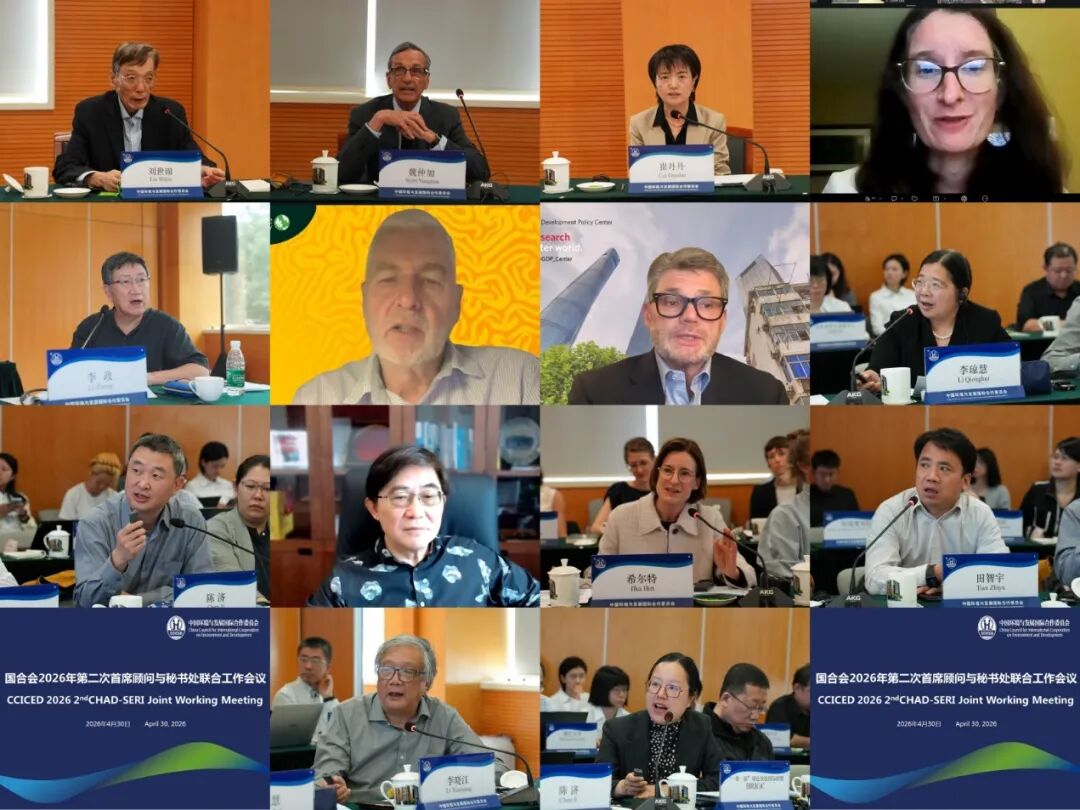
The CCICED 2025-2026 research year includes High-Level Task Force on China's Environment and Development Outlook, eight Special Policy Studies: "Implementation pathways, priority areas, and policy measures for the new round of NDC targets", "Promoting nature-positive policies and practice innovation", "Developing a new power system aligned with the next round of wind and solar growth targets", "Innovation in Green Financial Products and Services to Support Carbon Market Development", "Low-Carbon Transition Pathways for Key Industries in the Sustainable Blue Economy", "Advancing High-Quality Development Through Circular Economy with Smart Digitalization", "Green and Just Transitions Pathways for Traditional Energy Regions", and "Pathways to Advance Global Cooperation on Green Development", as well as two Scoping Studies on "Building a Climate-Adaptive Society" and "Carbon Market Expansion and Innovation". Representatives and experts from these research teams introduced their research progress. The Secretariat briefed progress of CCICED Phase VIII preparation and upcoming activities.
Nearly 100 representatives from CCICED research teams, partners, the CCICED Secretariat, and the Secretariat's International Support Office attended the meeting.
Contact Us:
E-mail:secretariat@cciced.net
Address:5 Houyingfang Hutong,Xicheng District,Beijing 100035 P.R.Chinazip code:100035
Copyright © 2020 Secretariat of China Council for International Cooperation on Environment and Development. All Rights Reserved. Presented by China Daily.
